

Mats Matter
What you place between your record and the platter can make all the difference.

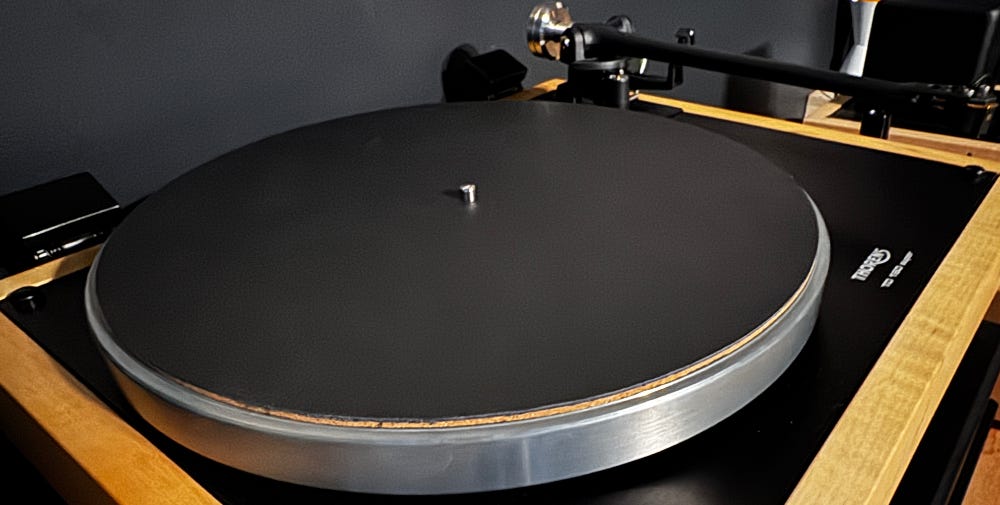
The mat on your turntable has zero sonic qualities. None. It won’t improve clarity, imaging, or bass control.
So why does changing it sometimes change what you hear?
It will affect the stability and tracking of the record sitting on it. That matters more than people realize. I can’t overstate it.
If a mat contributes to static buildup, sound will be affected. If it sits on a thin aluminum platter that rings like a bell when you tap it, and the mat has no damping properties, it might as well not be there at all. Some materials are better at damping and resonance control than others. Set a slightly warped record on an acrylic mat and it may slip. Record weights and clamps help, but that’s a topic for another discussion.
Another thing folks sometimes fail to account for is the height of the mat. That’s a sneaky one. Changing mats changes platter height. That affects the relationship between the stylus and the groove (think Vertical Tracking Angle or VTA). A thicker mat raises the record, which tips the back of the tonearm down. A thinner mat does the opposite. Altering the stylus angle changes the sound. You’re not hearing the mat, but you are hearing the change in VTA caused by the mat.
There are a lot of false claims out there about mats. I am guilty of making some myself early on when I was first experimenting with them. I mistook the mat’s interaction with my system for qualities the mat itself possessed. The soundstage sounded wider because the stylus was more stable, but I credited the mat. If someone bought a mat based on my “observation” that it improved soundstage, they might be sorely disappointed if it didn’t have the same effect in their system. That’s because it’s a different turntable and different variables at play. A mat may work with those variables or it may not. It can also work against them.
A mat will not unlock a hidden dimension of sound. It doesn’t have that ability. What it can do is mitigate vibrations, static, and resonance, based on the material it’s made of. That will affect how it interacts with both the platter it sits on and the record on top of it.
The right question for anyone to ask when assessing a mat is, “Does this mat improve my turntable system, with this cartridge, in this room, for the sound I’m hoping to achieve?”
A mat is a package of changes: VTA shifts, grip, platter interaction, and static control, among others. It’s a part of a system’s mechanical tuning. What’s never true is the claim that a mat solves the same problem for everyone. Any claims along those lines are either purposeful marketing hype or a misunderstanding of a mat’s actual role and properties.
Whenever this topic comes up in emails or conversation, I’m inevitably asked what mat I prefer. It actually comes down to three. I can’t seem to settle on one, so they rotate in and out depending on the weather, humidity, etc. They are presented with different variables at different times. They work well with my turntable. They each tend to “tune” my system in a similar way, and any differences between them are negligible in my system.
They are, in no particular order:
1. Leather/Cork hybrid mat made by Wooden Bull.
2. Rubber/Cork hybrid mat sold by Vinyl Nirvana.
3. Serene Mat made by Stack Audio.
I can’t count how many mats I’ve evaluated. I’ve landed on these three because of grip, vibration, resonance, and static control.
They aren’t magic carpets, but they do matter. Saying they don’t is just as silly as pretending they change everything.


A Cure for Bad Warps?
My heart sank.
It was warped. A brand new, recently pressed record of supposed audiophile quality… was warped. It wasn’t the worst warp in the world, but it was enough to ruin the moment and make me regret the sixty bucks I’d spent on it.
C’est la vie, right? There are worse problems to have.
As if someone had been reading my mind, I received an email from the co-founder of White Bridge Technology. He wanted to know if I’d be interested in testing a new product they’d developed called the M2 Vinyl Flattener. It was a weird coincidence.
I pulled up their website to check it out. I’ve tested a couple of flatteners in the past and was prepared to be underwhelmed. The M2 is visually slick when compared to the other flatteners I’ve seen, as well as the couple I’d actually tested.
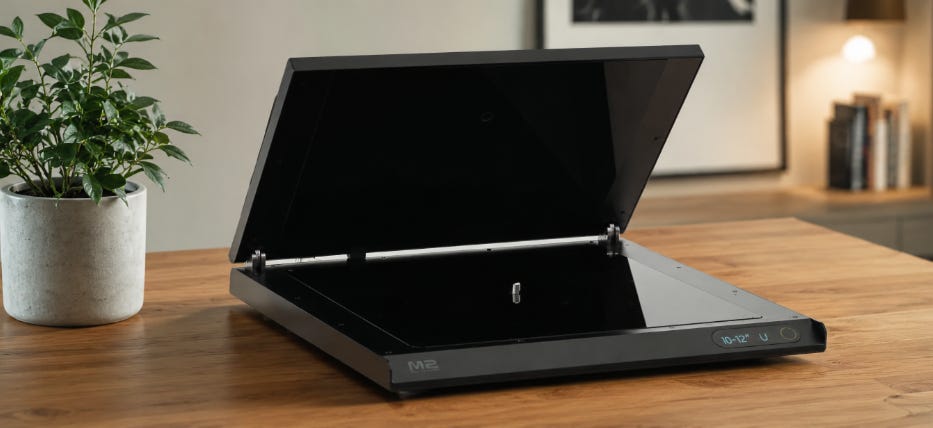
I was intrigued, so I said “yes”. If you’ve been a subscriber to this newsletter, you may have seen the unboxing video I did a couple of weeks ago.
The next day I went looking for warped records in my collection. I wanted to test it on a cheaper and older record first. I found one.
If you’re a paid subscriber you’ll get to see a more informal review video than the one I’ll post to YouTube.
Is a warp a death sentence, or just an inconvenience?? My view on warps has flipped.
As I type this, my decades-old, warped copy of The Faces A Nod Is as Good as a Wink… to a Blind Horse is safely inside the M2. Now a beloved old copy can remain where it belongs.