

Chasing the "S"

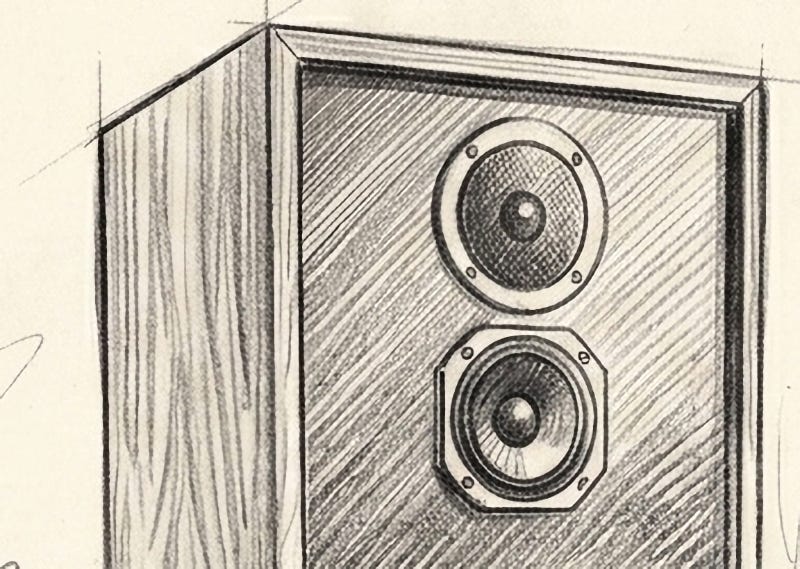
Last week three records in a row had a sibilant sound, and I knew I couldn’t ignore it anymore. I’ve had an intermittent problem with sibilance on the left channel for as long as I can remember. Sometimes it’s there, and other times not at all.
For a while I blamed pressings. George from Vinyl Rescue had a Van Halen record that cleared up with a newer copy, and I have the sibilant pressing he’s talking about. Then the anti-skate, even though I check it with a WallySkater. Then the curtains, the toe-in, the attenuator on the KLH Model 5s. Nothing stuck.
With careful listening, I realized it was a bit more than sibilance. It was almost as if the vocals were time-shifted. Not greatly, but just enough, and that would cause sibilance, especially on a record already prone to it.
I began to worry. I had swapped tubes recently. Could that be why? I doubted it since the tubes in the amp were smooth, non-fatiguing, and had brought the voice of my system closer to what I’ve always wanted.
But sibilance? Why? Could it be my amp? The phase splitters?
I completely removed my cartridge and set it up again from scratch using both the WallyTractor and WallySkater. That killed an hour of my Saturday afternoon.
I adjusted the speakers again.
No luck.
I was at my wit’s end.
On a whim, I swapped the speaker outputs so the right speaker was being fed from the left channel and vice versa. I fully expected the troubling “ssssss” to travel to the right.
It did not.
I switched things back and this time I physically swapped speakers.
The sibilance remained on the left.
I’d found my culprit. An unexpected one.
The room.
More specifically, that window. The very one covered by thick curtains.
The curtains weren’t enough, apparently. It would even explain the perceived time shift in vocals. Reflection.
I’d made a rookie mistake and blamed everything else but the actual, and most obvious, cause: early room reflections.
To test this, I pulled one of my absorption panels off the wall and stuck it in between the curtain and the window.
That did it.
The sound I’d been chasing for months needn’t have been chased at all. I simply failed to interpret the signs, and assumed the curtains were enough.
The lesson here? Simple…
The room is always part of the signal chain. Whether you’ve admitted it or not.

The Needle Drop

I was surrounded by pigs. At least that’s what it sounded like at one point. Earlier I had heard a dog in the distance. It was spooky in how real it sounded.
That’s what happens whenever I listen to Pink Floyd’s Animals. I come away from every listen wishing all records had that sense of spatial immersion. I don’t know if that’s a real term or if I just coined it, but that’s what it sounds like. I recently swapped out my tube mix, and whenever I make a change like that, it’s not long before Animals lands on the turntable just so I can hear the results. I almost always sit in amazement.

Are Five Lasers Better Than None?
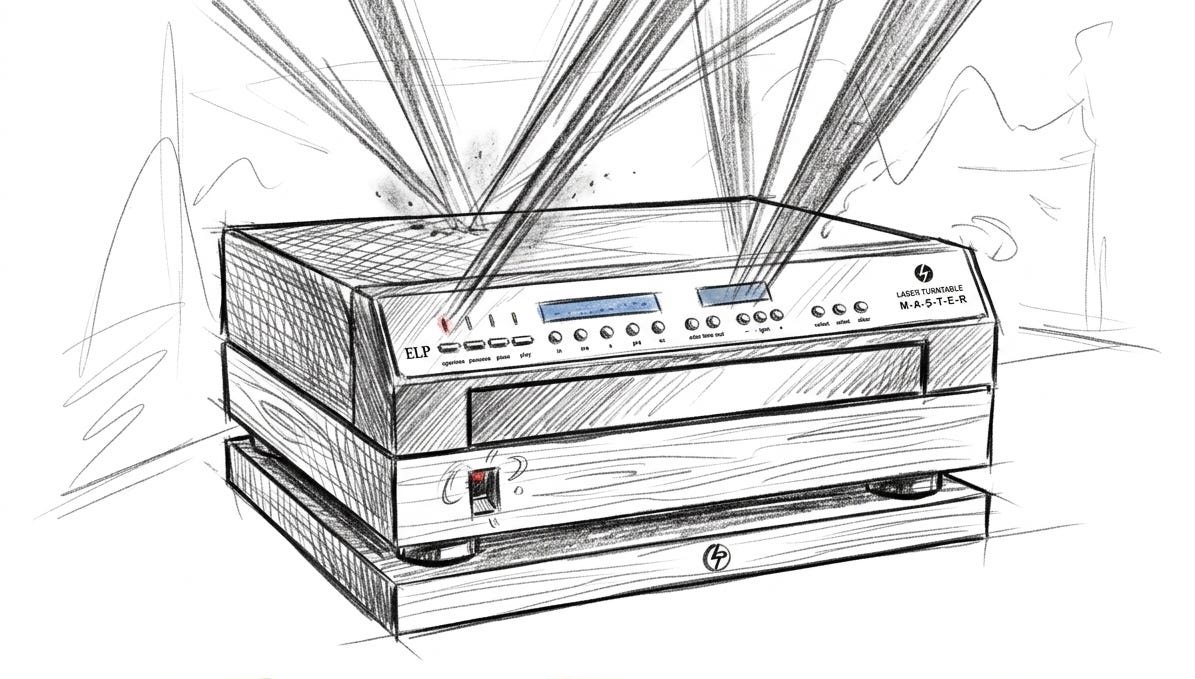
If I asked a room full of audiophiles what the benefits might be to use a laser instead of the traditional “diamond at the end of a cantilever”, I bet I would hear the following responses.
“No contact means better sound.”
“It sounds like the master tape.”
Then, of course, there are the naysayers.
“It’s digital because it uses lasers like with CDs.”
“You can’t play dirty records on them.”
“You can’t play colored or clear records on them.”
There are a bunch of myths floating around the record community when it comes to laser turntables. Some are based on half-truths, and others are completely wrong.
True laser turntables are made by ELP, a Japanese company which has been making them for over two decades. If you are familiar with linear tracking turntables, ELP’s turntables function in much the same way. Instead of one laser, there are five. Two track the side walls of the groove, two read the stereo information, and the fifth reads the record’s surface to account for warping and height.
Wild stuff.
Let’s shine a light on the statements offered by the room of imaginary audiophiles. Where did they get things right and wrong?
How about we take them in order.
“No contact means better sound.”
You would think this would be the case, right? Laser turntables don’t have to worry about VTF, or anti-skate, vibrations, or any of the other adjustments that traditional turntables with cartridges have to account for. There’s no wear on the record either. It will remain as pristine as the day it was pressed if you take care of it.
But better sound? The absence of contact solves one problem, but not every problem. The condition of the record matters. That aside, using a laser also means that the signal passed back has lost the character of the cartridge. Cartridges have voices. It’s why people are drawn to different models and brands. You could argue, and some have, that getting rid of all that material brings things closer to the master tape, but that’s not true either. In fact, ELP has added an “Analog Noise Blanket” to reduce the noise floor and control treble. With it on, the treble is a bit darker and more listenable, instead of unpleasant. Think of a mask that hides the laser’s true identity.
“It sounds like the master tape.”
This goes hand in hand with the “better sound” argument. While laser-read information is more even and isn’t colored by mechanical parts, a review back in 2008 by Absolute Sound once described it as “pleasant but dull”.
“It’s digital because it uses lasers like with CDs.”
This one feels right but it’s completely wrong. The ELP’s photodetectors produce a varying voltage signal just like a traditional moving magnet and moving coil setup would. There is no digital step at all. It’s analog all the way.
“You can’t play dirty records on them.”
Not quite accurate. You can play dirty records on them but you probably won’t want to. The laser has zero mass and interprets every particle as part of the music. Records need to be cleaned regardless, but a record played on an ELP needs more than casual attention. Possibly before every playback, but that depends on your cleaning routine and storage practices.
“You can’t play colored or clear records on them.”
Okay, this one is true as well, and a real drawback for those who have a lot of colored and clear records in their collection. The laser technology requires the ability to “see” the record, which black vinyl allows. Transparent or light colored records are seen as nothing at all. They are essentially ghosts in the machine.
I mentioned that ELP has been in the business of making them for decades. They cost more than most used cars. We’re talking upwards of 20K for the ELP LT-Master. They’ve managed to remain in business, but they aren’t taking over the world. Not yet, anyway. The fact that folks don’t quite understand how they work or the benefits and drawbacks, speaks to that.
One of these days I’d love to get my hands on one to really hear what it sees. Until then, I’ll continue to enjoy my Thorens and Hana MH cartridge’s physical body.

This Week’s Recommendation

I owned an AT-LP60 at one time, which is why I have no problem recommending it. This is actually the LP60X model. It’s always my first choice when someone asks me what they should buy and are just starting out. If you know of anyone in a similar entry-level stage point them in the direction of the LP60X.

My “Updated” Cleaning Routine
I swear by my cleaning routine, but it’s not for everyone. What is for everyone is the booklet I’ve compiled that traces record cleaning methods from the simple to the complex. At the end I reveal my own, complete with the chemicals used, the proper amounts, and how they are applied and removed.


App Candy for the Vinyl Lover
Enough said Here they all are!


Vinyl & Gear News This Week
Enjoy your records!
Some product links are affiliate links. As an Amazon Associate, I earn from qualifying purchases.