

4 ohm or 8 ohm?
A chase that need not have been...

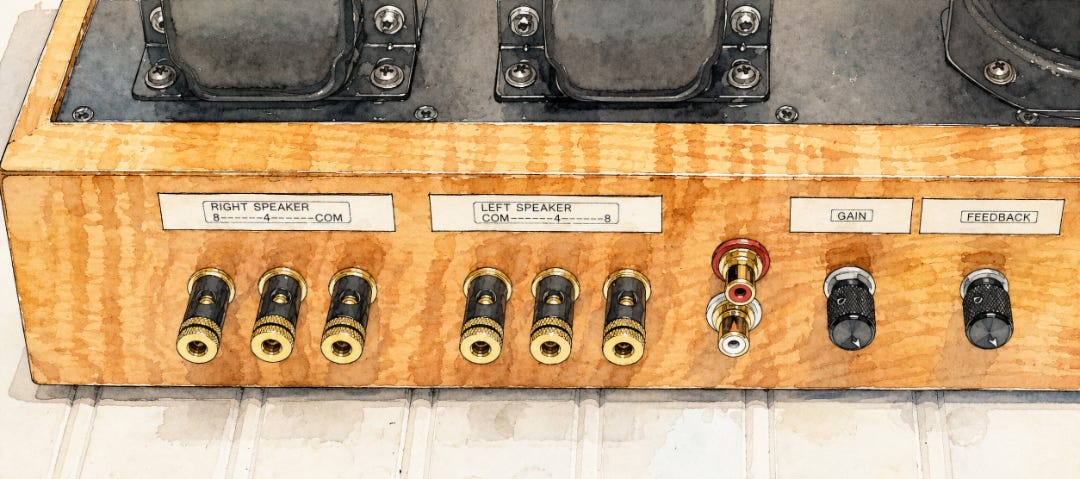
I can’t tell you how long I struggled with the question of 4ohms or 8ohms. If I walked into a crowded room, pretty much anywhere, and asked this question, “I have a 6ohm speaker. Do I plug it into the 4ohm or 8ohm tap?”, I’d receive blank stares and a wide berth. Were I to ask the same question in any number of audio forums or Facebook groups, I’d receive advice, edicts, and nasty comments about my choice of gear or speakers.
This journey for the answer started way back when I bought my KLH Model 5s. I’d never spent that much on a pair of speakers and could only do so because of my first and only royalty check from my book. I call them “the speakers that evolution bought”. They are 6ohm speakers. My main amp at the time was a Galion TS120 tube amp. It gave me two choices, those being 4 ohm or 8ohm. I asked the owner of Galion, Thomas Tan, what he would suggest and his answer was to try both and pick what sounds good.
At the time I didn’t feel my ears were good enough to judge so I began my search for a more definitive answer. I met trolls, pseudo-experts, and self-proclaimed audio oracles along the way. Some said 4ohm, while others told me to look no further than 8ohm. When I asked “why” I was always told a different version of the following analogy…
“Your tube amp is a water pump. The tap is you telling the pump which size hose is attached. Match the tap to the speaker and the pump runs in its sweet spot.”
Fine. Whatever. Even though the analogy was always similar the advice was always different.
So I went with the 4ohm simply because that was what I heard more often and it made sense to give my tube amp a break.
When I switched to the Aric Audio Transcend tube amp, I stuck with the 4ohm. For years.
One thing has always bugged me. My system always seemed to take a full album before opening up to reveal a deep and wide soundstage. I’ve been chasing the underlying cause for ages. I settled on it being the cartridge’s elastomer suspension requiring time to limber up, especially in cold temps. I even resorted to putting on an expendable “warm-up record” before listening sessions.
On a whim, and I can’t really say why, I thought I would plug into the 8ohm taps. I know my system and its sound and was confident I’d hear the difference.
I did. Immediate openness.
I knew it could just be my imagination, but I had come into it without expectations and even a bit skeptical.
I left the speakers connected to the 8ohm tap and sat down the next night. Again, same experience. More bass, more open, wider soundstage. After an album that stage widened so I could hear instruments all over the place. When listening to The Doors’ LA Woman, Jim’s vocals were center on the title song but Robbie’s guitar and Ray’s organ were so far apart I felt as if I was in the studio. I still attribute the “widening” effect over time to the cartridge loosening up, but there can be no denying how open things are. “Airy” seems to be the right word. There’s space there that I know hadn’t been there previously.
“Trust your ears,” both Thomas Tan and Aric Kimball told me when I asked them what taps to connect my Model 5s to. I didn’t, and as the years went by I forgot that advice.
Want to know what else I forgot, and which could have saved me all this trouble? Before writing this I went back over the years of advice I’d received on this topic, and stumbled across an email response I got from KLH when I reached out to them. I don’t know if I never saw it, or simply forgot about it.
“For higher power tube applications we always recommend you use the 8 ohm tap. About the only time we would recommend the 4 ohm tap is if you’re using a low power single-ended triode amplifier (which we really don’t recommend with our speakers).”
I have no words…

This Week’s Recommendation
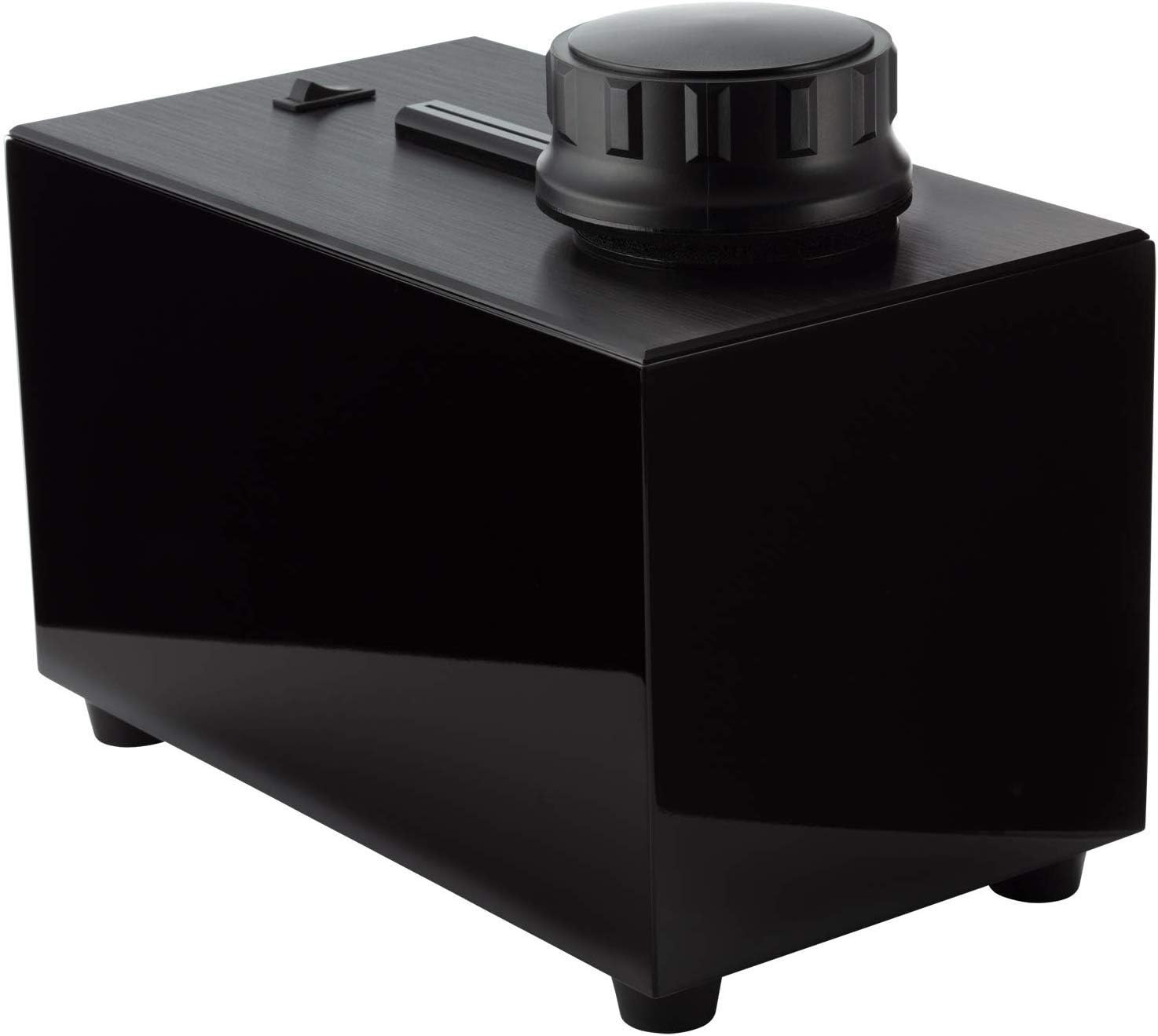
As I eagerly await the upcoming release of the Record Doctor XI, I want to call attention to this workhorse, the Record Doctor VI. I bought mine five years ago and I still use it in my record cleaning process. It may require you to manually turn the record so the vacuum can do it’s thing, but that doesn’t take away from how powerful it is. If I didn’t know better I’d say the motor in the Record Doctor VI is better than it was when I bought it. Of course, that’s ridiculous, and would defy the entropic laws of the universe, but I’m hanging onto this one.

Rick’s E-Book Guides

Enjoy your records!
Some product links are affiliate links. As an Amazon Associate, I earn from qualifying purchases.
Rick, have you tired of the record doctor X? When do you use your record doctors in conjunction with an ultrasound machine one for pre cleaning the ultrasound for cleaning and the other record cleaning unit for rinsing with distilled water?